Meme Coin Trading, Lessons From a $450K Run
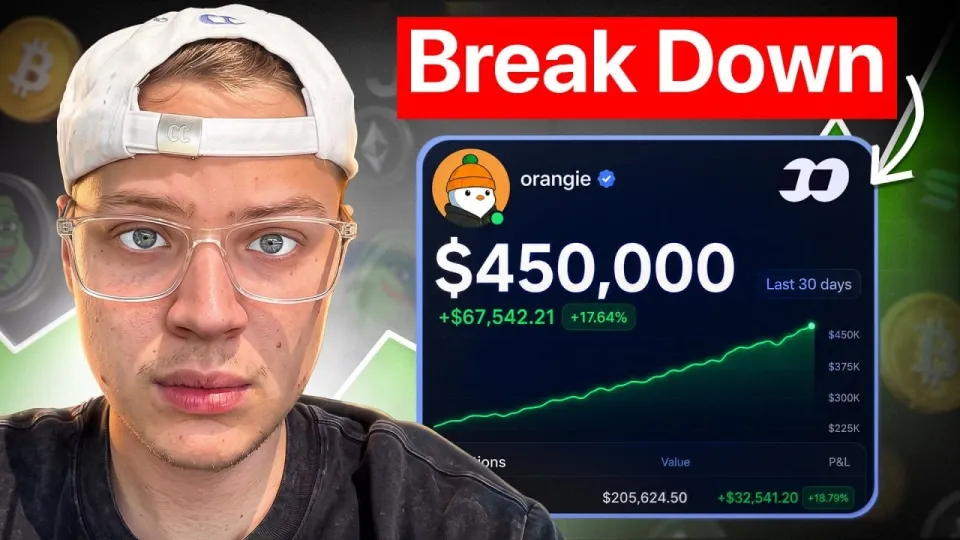
Video: How I Made $450,000 Trading Memecoins in 30 Days
Need articles like this for your video? They help promote it on YouTube and Google — order them in the Telegram bot @sat_sit_bot. It writes articles around your video, embeds the video and publishes them on popular niche websites (no ads). Free trial — 50 articles.
· based on the channel Orangie Web3
A meme coin is a cryptocurrency whose value is driven mainly by community, narrative and attention rather than by cash flow or protocol revenue, which makes it a high-risk, high-volatility trading instrument. In the Orangie Web3 video "How I Made $450,000 Trading Memecoins in 30 Days," the host walks through his own trades on Solana-style launches and points viewers to his Kaizen Group membership for the workflow behind those numbers. The headline figure is real as a claim from the creator, but it describes a best-case outcome, not an expected return.
What a meme coin actually is and why it moves so fast
A meme coin has no product roadmap requirement to trade; its price is a function of liquidity, holder count and social momentum. Tokens launch in minutes on chains such as Solana, often through launchpads that bundle liquidity and burn the mint authority, and the first hours decide whether a coin graduates to a larger venue or dies at a few thousand dollars of market cap. Because supply is concentrated in the hands of early buyers, a single wallet selling can wipe out most of the chart. That structure explains why a trader can book six figures in a month and why the same strategy produces total losses for most participants.
How a $450,000 month is actually built
The reported result comes from many trades, not one lottery ticket, and the mechanics are repeatable in form even if the returns are not. The pattern described in the video and echoed by viewers looks like this:
- Screen new launches for liquidity, holder distribution and social traction before price runs.
- Enter small on unproven coins and size up only after the chart confirms demand.
- Take partial profits into strength instead of waiting for a round number.
- Cut losers quickly; a dead memecoin rarely recovers its liquidity.
- Keep a cash reserve so a single strong day can be exploited.
The arithmetic matters. If a trader risks $500 per attempt and wins 3x on one in twenty, the winners must be large enough to cover nineteen losses plus fees. A $450,000 month implies both a large bankroll and several outsized wins, which is why copying the position sizes without the bankroll is the fastest route to ruin.
The tools: FOMO, Discord and the information gap
Execution speed and information access decide outcomes in memecoin trading more than chart reading does. The video promotes the FOMO trading platform for fast entries and exits, a Discord community for calls and discussion, and the host's Instagram for shorter updates. One of the most-liked comments under the video makes a fair point: top traders sit in private groups where calls are shared and coins are sniped collectively, so a retail viewer watching a public video is always a step behind. That gap is not a reason to avoid the market, but it is a reason to treat public calls as late information rather than early signals.
Risk rules that separate survivors from statistics
Risk control is the only part of memecoin trading fully under a trader's control. Viewer experience in the comments shows the realistic distribution: one trader put in about $100, lost roughly 90% while learning the mechanics, then tripled the remainder on a single coin. That is the normal shape of the game — many small losses, occasional large wins. Practical rules:
- Cap any single position at a percentage of capital you can write off completely.
- Predefine the exit before entering, both for profit and for loss.
- Avoid tokens with unlocked liquidity, hidden mint authority or a handful of wallets holding most of supply.
- Expect slippage and fees on thin pools; they eat a meaningful share of small gains.
- Log every trade with entry, exit and reason, so patterns become visible.
Questions traders ask after watching the video
Newer viewers consistently raise the same doubts: the pace of explanation, where to start with almost no capital, and how to tell a real setup from a pump. The honest answers are unglamorous. Start with a small amount you are prepared to lose, because tuition in this market is paid in losses. Slow the process down by reviewing your own trades rather than chasing every call. And accept that a strategy built on one trader's entries cannot be copied without their exits, their size and their information flow. The most useful habit is a written journal: entry thesis, exit plan, and what actually happened.
Useful links
- Kaizen Group membership: https://whop.com/checkout/plan_GTFkEFh0JFpU8?a=orangie
- FOMO trading platform: https://fomo.family/r/orangie
- Discord community: https://discord.gg/memecoins
- Instagram: https://www.instagram.com/orangieyt/
Final thoughts on the meme coin gamble
A $450,000 run in 30 days is a genuine trading result and a terrible baseline for expectations; the same method that produced it produces far more losses across the market. What transfers from the Orangie Web3 breakdown is the structure — small size, fast exits, a journal, and access to information before the crowd — not the dollar figure. Treat every memecoin position as money already spent, and let the occasional winner be a bonus rather than a plan. If you want the full workflow behind the trades, the Kaizen Group membership is the entry point the creator recommends.
Key takeaways
- A trader on the Orangie Web3 channel reports turning memecoin trades into $450,000 in 30 days on Solana-style launches.
- Most memecoin outcomes are losses: one viewer lost about 90% of a $100 stake before tripling it on a single hit.
- The edge described is process, not prediction: fast entries, defined exits, and small size on unproven tokens.
- Community access matters — top traders share calls and snipes in private groups, which retail traders rarely see.
- Survival rule: only risk money you can lose entirely, because one winner can pay for many losers.
Source: How I Made $450,000 Trading Memecoins in 30 Days · Markdown version
Questions & answers
How realistic is making $450,000 from meme coins in 30 days?
It is possible but extremely rare, and it requires a large starting bankroll plus several outsized wins in a short window. The same strategy produces total losses for most participants, so the figure should be read as a best-case example rather than an expected return.
How much money do I need to start trading meme coins?
You can start with a small amount, but only money you are willing to lose entirely, since many tokens go to near zero. Viewers report starting around $100 to learn the mechanics, and the practical rule is to size positions so a total loss does not affect your finances.
Why do some traders seem to buy before everyone else?
Private groups share calls and execute together, so members often enter before a coin appears on public feeds. Public videos and social posts usually arrive after that first move, which is why copying calls blindly tends to produce worse entries.
What is the biggest risk with meme coins?
Liquidity and concentration risk: a few wallets can hold most of the supply and exit at any moment, collapsing the price. Tokens with unlocked liquidity or hidden mint authority are especially dangerous, and slippage on thin pools adds further losses.